CONTACT
© 2026 Only The Brave. Alll rights reserved.

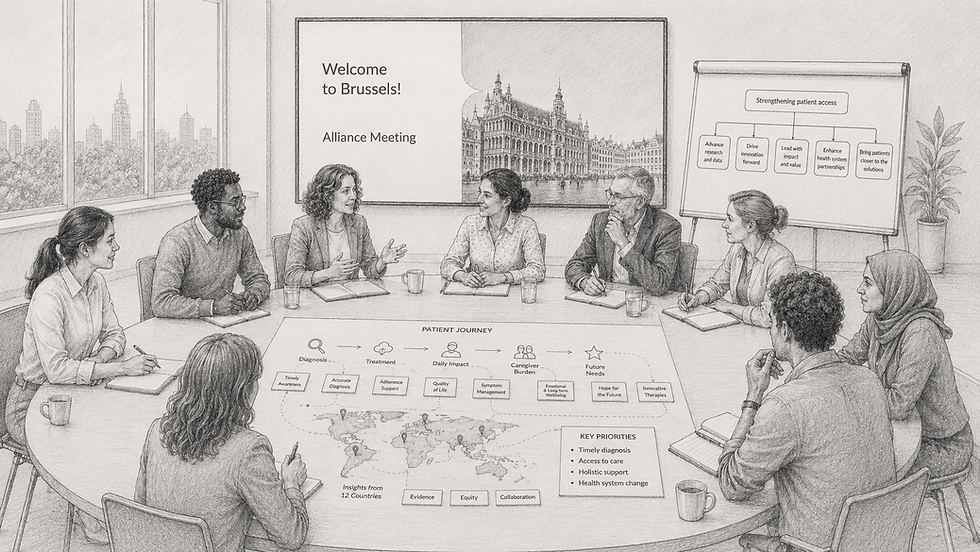
Creating a shared vision for earlier intervention through patient and clinician partnership
Building a global community of patients and clinicians to advance the understanding of proactive care in a neurological condition.
From a patient-centred design perspective, this inclusive approach is vital; it shifts the paradigm from designing for a community to co-creating with them
I was particularly inspired by the shift in focus – from generating information to creating real impact by making it useful, accessible, and action-oriented.
Challenge
A global Medical Affairs team recognised that improving patient outcomes would require more than the introduction of a new treatment option. Earlier intervention represented a significant shift from established clinical practice, with long-standing standards of care shaping expectations among both healthcare professionals and people living with the condition.
To support this change responsibly, there was a need to better understand the lived experience of patients alongside the perspectives of clinicians, identifying barriers to earlier intervention and defining what meaningful, proactive care could look like in practice. The objective was to develop a credible, patient-informed vision that could support scientific dialogue, education and future engagement activities.
BRAVE Approach
From across five continents, BRAVE convened a multidisciplinary community of clinicians and people living with the condition. Through in-depth, qualitative interviews, BRAVE explored current care pathways, unmet needs and opportunities to improve patient outcomes via earlier intervention.
These insights were synthesised into a shared vision for future care, bringing together clinical expertise and lived experience. This formed the basis of a collaborative workshop where participants agreed upon practical recommendations and resources for healthcare professionals, patients and advocacy organisations.
To sustain engagement beyond the workshop, BRAVE established a dedicated digital community, enabling continued dialogue, collaboration and refinement of resources. This ensured that future educational initiatives remained grounded in real-world experience while reflecting evolving clinical perspectives.
Results / Impact
The programme established a robust foundation for patient-centred scientific engagement, providing the Medical Affairs team with credible insights to inform educational strategy and stakeholder engagement.
By embedding lived experience throughout the process, the initiative helped to build alignment around earlier intervention, while ensuring that future communications and educational materials reflected the realities of patients and clinical practice.
The collaborative approach strengthened engagement across the global community, with 94% of participants agreeing that the shared vision and objectives resonated with their experience.
A targeted education programme supporting confident treatment decision-making in oncology
Building a multi-stakeholder alliance to improve long-term care in a chronic inflammatory condition